
Home / Resources / Equipment & costs
EQUIPMENT & COSTS
What an EEG machine costs, and when a practice doesn’t need to buy one
Clinical-grade EEG systems start around $20,000 new and run into six figures. Used systems list from under $4,000 to about $15,000. In the worked model below, the equipment comes to $10.00 a study and the technologist to $52.50, so staffing is the larger cost. The no-equipment-purchase model removes the purchase line and replaces the technologist with trained existing staff.
THE SHORT ANSWER
- A new clinical EEG system often starts at $20,000 and can run well into six figures, depending on channel count, software and service (source).
- Used systems were listed from $3,733 to $14,995 on reseller sites on November 6, 2026 (source).
- Disposable electrodes cost about $13 per study; paste adds cents (source).
- An EEG technologist averages $73,166 a year, about $35 an hour (source).
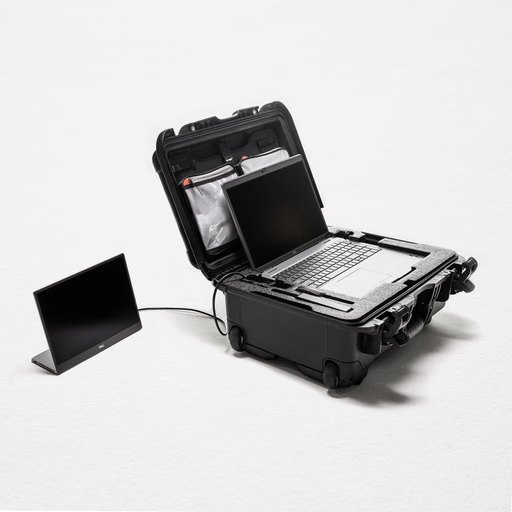
- VoxNeuro practices don’t buy an EEG machine. Compatible EEG hardware is included; pricing is per assessment plus a one-time setup and training fee.
EEG machine prices by grade
Searches for “EEG machine cost” return three different products under one name. Consumer headsets sell for under $1,000 and record from one to 14 channels. Research systems run from $1,000 to $25,000 with 7 to 64 channels. Clinical and medical-grade systems often start at $20,000 and go well into six figures, with far higher channel counts (source).
Price ranges by equipment grade, from an EEG hardware maker’s guide updated December 3, 2025. The clinical bar is open-ended; the source says the range runs well into six figures.
For a practice, the clinical tier is the only line that matters. The quote you receive will depend on channel count, the acquisition software, the review software your reading physician uses, and the service contract.
| Grade | Price | Channels | Built for |
|---|---|---|---|
| Consumer | under $1,000 | 1 to 14 | Personal use and wellness |
| Research | $1,000 to $25,000 | 7 to 64 | University and industry labs |
| Clinical / medical | from $20,000, into six figures | high channel counts | Hospitals, neurology practices and EEG labs |
What the used market looks like
Resellers list refurbished and used clinical systems. On November 6, 2026 we found an ambulatory EEG system at $9,995 and a full EEG system with video at $14,995. A certified refurbished digital EEG system was listed at $3,733 (source). Those prices are a fraction of new, and they come with questions the listing won’t answer.
- Does the software licence transfer, and does the vendor still support that version?
- How old is the amplifier, and is a service contract available for it?
- What does recalibration and cleaning cost before the first patient?
- Does the system’s clearance status match the service you plan to bill?
An amplifier with no software support can’t run a study. Get the answers in writing before the deposit.
The costs that keep going after the purchase
Consumables
A routine recording uses roughly 21 electrodes under the standard 10/20 placement. Disposable cup electrodes sold in packs of 100 cost $63, or $0.63 each. Conductive paste sells from $34 for three 4 oz tubes (source). Reusable lead wires for those cups are sold separately and are left out of the model below.
Staff
The technologist is the largest recurring line. The national average for an EEG technologist is $73,166 a year, about $35 an hour, with the middle half of the range between $61,884 and $82,345 (source). Our staffing and training guide covers the credential pathways and what a practice can do instead of hiring.
Service, software and space
Service contracts and software licences vary by vendor and we don’t publish ranges for them here. Ask for the annual figure in writing. A routine study also needs a quiet room for the recording window. The code guide puts that at 20 to 40 minutes for a routine awake-and-drowsy EEG (source; see the billing guide), before set-up and clean-up time.
Reading time
Every study is read and reported by a physician. That time is paid for somewhere, either in salary or in a reading arrangement, and it scales with volume.
Our data
A worked cost model for a practice that buys a low-end clinical system and runs routine studies. Inputs are the published figures above (the hardware maker’s price guide, the electrode store listing and the salary.com hourly figure) plus four assumptions we state in the table. Each line is its inputs multiplied out, so you can rerun it with your own numbers.
| Line | Input | Per study |
|---|---|---|
| System purchase (assumption: amortized over 5 years) | $20,000 ÷ 5 years = $4,000 a year | $10.00 |
| Studies per year (assumption) | 400 | n/a |
| Disposable electrodes | 21 × $0.63 | $13.23 |
| Conductive paste (assumption: 60 studies per tube) | from $34 ÷ 60 studies | $0.57 |
| Technologist time, salary only (assumption: 1.5 hours per study including set-up and clean-up) | 1.5 × $35 | $52.50 |
| Total before physician reading, room and service contract | $76.30 |
Volume moves the equipment line and nothing else. At 200 studies a year the equipment line doubles to $20.00 per study (computed from the table above) while the technologist line does not move. This model describes a routine EEG study. A cfNI assessment is a different service with a different cost structure, covered next.
How the no-equipment-purchase model changes the math
VoxNeuro practices don’t buy or lease an EEG machine. Compatible EEG hardware is included. Your staff run a 20–30 minute assessment using FDA-cleared cfNI software, the software analyzes the data and generates the report, and your clinician reviews it. Pricing is per assessment plus a one-time setup and training fee, and training for operators and clinicians is part of that fee. Training and implementation can typically begin within two weeks.
| Line | Buying an EEG system | VoxNeuro |
|---|---|---|
| Capital outlay | $20,000 and up for a new clinical system | No equipment purchase; compatible hardware is included |
| Who runs it | An EEG technologist you hire or credential | Your existing staff, trained by VoxNeuro |
| Analysis | A physician reads the raw recording | cfNI analyzes the data and generates the report; your clinician interprets it |
| Cost shape | Fixed purchase plus variable cost per study | Per-assessment pricing plus a one-time setup and training fee |
| Commitment | Own the asset; service contract annually | Ask our team about minimums and contract terms |
We don’t print fee amounts on this page because they depend on the practice and its volume. The cost moves with the number of assessments you run, with no capital line and no hiring line.
Questions to ask before you buy anything
- What is the all-in first-year figure: hardware, software licences, installation, training and the service contract?
- Which services will the system be used for, and does its clearance cover them?
- Who will run it, what credential do they need, and what does that person cost per year?
- Who reads the studies, and how is that time paid?
- How many studies a month do you expect, and what does the per-study cost look like at half that volume?
- What happens to the asset if the service doesn’t reach the volume you planned?
What this guide leaves out
Prices are what we observed on the dates listed in the sources, and equipment vendors change them. We don’t cover reimbursement here; the EEG CPT codes billing guide does. We don’t cover facility requirements for imaging departments, where site rules decide who may run an assessment. Where a figure is an assumption, the table says so.
FAQ
Can a practice use a research-grade EEG headset?
The research tier is priced and built for labs. Whether a device may be used for a clinical service depends on its labeling and clearance status, so check that before you plan a billable service around it.
What does VoxNeuro’s hardware cost?
There is no separate hardware charge. Compatible EEG hardware is included. You pay per assessment plus a one-time setup and training fee.
Is a cfNI assessment the same as a routine EEG?
No. A routine EEG records resting brain activity for a physician to read. A cfNI assessment records EEG while the patient completes five tasks, and the FDA-cleared software analyzes event-related potentials and compares them with a reference database. The report supports your clinician’s interpretation; it does not provide a diagnosis.
What does the setup and training fee cover?
Site setup, operator training for the staff who collect the data, and interpretation training for your clinicians. Ask our team for the current figure and terms.
Sources
- EEG hardware maker’s price guide to EEG equipment by grade (consumer, research, clinical), updated December 3, 2025. emotiv.com. Observed November 6, 2026.
- Used EEG system listings on reseller sites: an ambulatory EEG system at $9,995 and an EEG system with video at $14,995 (admarneuro.com) and a certified refurbished digital EEG system at $3,733, listed November 1, 2026 (dotmed.com). Observed November 6, 2026; listings change.
- Disposable EEG cup electrodes: 25 cups with leads from $40 and 100 detachable cups for $63; Ten20 conductive paste, three 4 oz tubes from $34. electrodestore.com. Observed November 6, 2026.
- EEG Technologist salary, United States: average $73,166 a year ($35 an hour); 25th to 75th percentile $61,884 to $82,345. salary.com, as of November 1, 2026.
- CPT 95816, 95819, 95812 and 95813 descriptors and recording-time ranges. pabau.com procedure code guide. Observed November 6, 2026.
- VoxNeuro product and program facts: voxneuro.com (how it works, tasks, training, pricing model) and About VoxNeuro (FDA clearance 510(k) K253015, quality certifications).
See what adding VoxNeuro involves.
Per-assessment pricing, included hardware and training that typically begins within two weeks.